Cute Santa Claus Embroidery File Review
As an experienced embroidery designer who frequently consults for small business owners and merch creators, I evaluate digital assets not just on their aesthetic appeal, but on their commercial viability. When a client presents a Cute Santa Claus Embroidery File for consideration in their product line, my first question is always: does this design translate effectively from screen to fabric? Does it hold up as a branded asset? In this review, we will dissect the potential of this file for use in small business merch, including custom apparel, embroidered patches, and promotional items.
First Impressions and Visual Personality
The title suggests a playful, approachable character, while the description hints at a specific visual style. However, there is a notable discrepancy in the provided metadata that requires immediate attention. The description mentions "a delightful trio of white daisies" with "cheerful yellow centers," which contradicts the title referencing Santa Claus. As a professional reviewing this for business use, this inconsistency is a red flag. A machine embroidery design must have a clear visual identity. If the file actually depicts daisies, it belongs in a spring or floral category, not Christmas. If it depicts Santa, the description is erroneous.
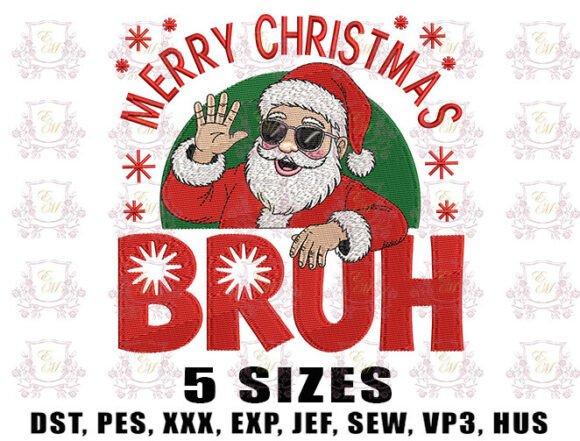
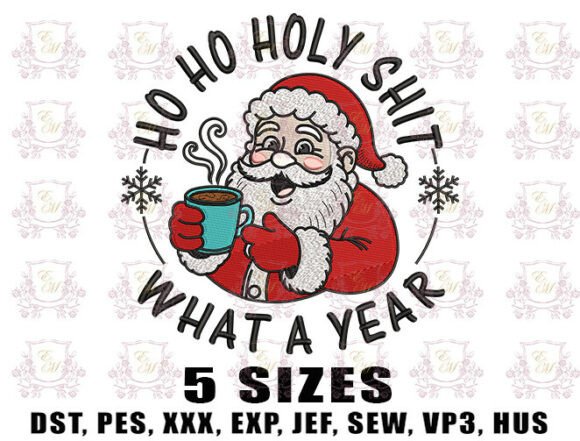
Assuming the file correctly represents a cute Santa Claus design intended for the holiday season, the visual personality should be evaluated based on its ability to convey warmth and tradition without appearing cluttered. For a boutique or handmade shop, a "cute" aesthetic often translates well to customer engagement. It feels friendly, inviting, and suitable for gifts. However, if the design includes excessive detail, it may lose definition when digitized. The key is to determine if the design reads clearly as a cohesive icon or if it becomes a muddy blob of thread colors when stitched at smaller sizes.
Real-World Business Applications
For small business owners, particularly those in the food, beverage, or retail sectors, branded merchandise serves as both a revenue stream and a marketing tool. Here is how a well-executed embroidery file of this nature can perform in various applications:
- Embroidered Patches: This is perhaps the most versatile application. A clean, centered Santa design works exceptionally well as a chest logo on staff uniforms for cafes or bakeries during the holiday season. It adds a touch of seasonal cheer to standard workwear without overwhelming the brand’s primary logo.
- Apparel Decorations: For custom apparel, this design can serve as a focal point on sweatshirts, hoodies, or t-shirts. It is also ideal for sleeve details or pocket accents on denim jackets, appealing to younger demographics looking for festive yet stylish options.
- Hats and Caps: Cap embroidery is a staple for local businesses. A compact version of this design fits perfectly on the front panel of baseball caps or beanies. It is crucial, however, that the design is simplified enough to accommodate the curvature of the hat and the limited space of a standard 3.5” x 3.5” hoop.
- Tote Bags and Aprons: For florists, bookstores, or craft shops, a tote bag design featuring this motif can drive sales during December. Similarly, apron embroidery for kitchen staff or bakers adds a professional yet festive touch, reinforcing brand identity in a hands-on environment.
- Product Packaging and Labels: Beyond wearable goods, this design can be used on hangtags, gift boxes, or product labels. While these are often printed, having a high-quality digital file allows for seamless integration into printable mockups, ensuring visual consistency across all brand assets.
Strategic Considerations and Limitations
Not every design suits every application. When integrating a Cute Santa Claus Embroidery File into your production workflow, you must consider where the design might fail. Small patch sizes require simplified outlines; intricate facial features or complex background elements may disappear or cause stitching errors. Curved surfaces, such as the brim of a cap or the shoulder seam of a shirt, demand designs that are balanced and not overly tall, to prevent distortion.
Fabric texture plays a significant role in the final look. On loose-weave fabrics like burlap or certain canvas materials, fine details may get lost. Dark uniforms require careful thread color selection; white highlights may not pop against black fabric without proper underlay or stabilizer support. Additionally, items that undergo frequent washing, such as aprons or staff shirts, need robust stitch density to prevent pilling or thread breakage over time. If the design relies on long, floating stitches, it may snag easily.
Impact on Brand Identity and Customer Trust
In the realm of brand identity, consistency is key. Using a high-quality, professionally digitized file signals professionalism to your customers. A sloppy stitch job or a misaligned design can undermine the perceived value of your product. Conversely, a crisp, well-executed embroidery enhances the tactile experience of your merchandise, fostering a sense of quality and care. This directly influences customer trust and recognition. When a customer sees a beautifully embroidered logo on a tote bag or a uniform, it reinforces the handmade, premium nature of your brand.
Furthermore, seasonal designs like this can boost buyer engagement by creating a sense of urgency and relevance. Limited-edition holiday merchandise encourages purchases as gifts, driving traffic to your online store or physical boutique. By offering products that align with cultural moments, you position your brand as attentive and community-focused.
Practical Designer Notes for Production
Before committing to bulk production, follow these essential steps to ensure the success of your project:
- Test in Black and White: Convert the design to monochrome to check contrast and balance. If the design lacks clarity without color, it will struggle in execution.
- Check Small Size Legibility: Reduce the design to its smallest intended output size (e.g., 2 inches) to ensure key elements remain distinct.
- Review Thread Color Contrast: Ensure that the chosen thread colors provide sufficient contrast against the target fabric. Light threads on light fabric or dark on dark can result in a invisible design.
- Inspect Spacing and Density: Look for areas where stitches may overlap excessively or leave gaps. High stitch density can cause fabric puckering, especially on lightweight materials.
- Confirm Hoop Size: Verify that the design dimensions fit within your machine’s standard hoops to avoid unnecessary re-hooping or registration errors.
- Test on Real Fabric: Always run a sample on the actual fabric you intend to use. Digital previews do not account for fabric stretch, grain, or texture.
- Use Proper Stabilizer: Select the correct stabilizer (cut-away, tear-away, or water-soluble) based on the fabric type to maintain stability during stitching.
- Create a Mockup: Generate a realistic mockup for client approval or marketing purposes. This helps visualize the final product before production begins.
- Compare with Other Assets: Place the design alongside other design assets in your collection to ensure it complements your existing brand palette and style.
- Confirm Commercial Licensing: Most importantly, verify that you have the appropriate commercial license to sell products made with this file. Unauthorized use can lead to legal issues.
In conclusion, a Cute Santa Claus Embroidery File can be a valuable addition to your commercial embroidery offerings, provided it is executed with precision and aligned with your brand’s aesthetic. By addressing the discrepancies in the current description and following rigorous testing protocols, you can create high-quality merchandise that resonates with customers and strengthens your market presence. Remember, the difference between a good product and a great one often lies in the details—both in the design and in the production process.